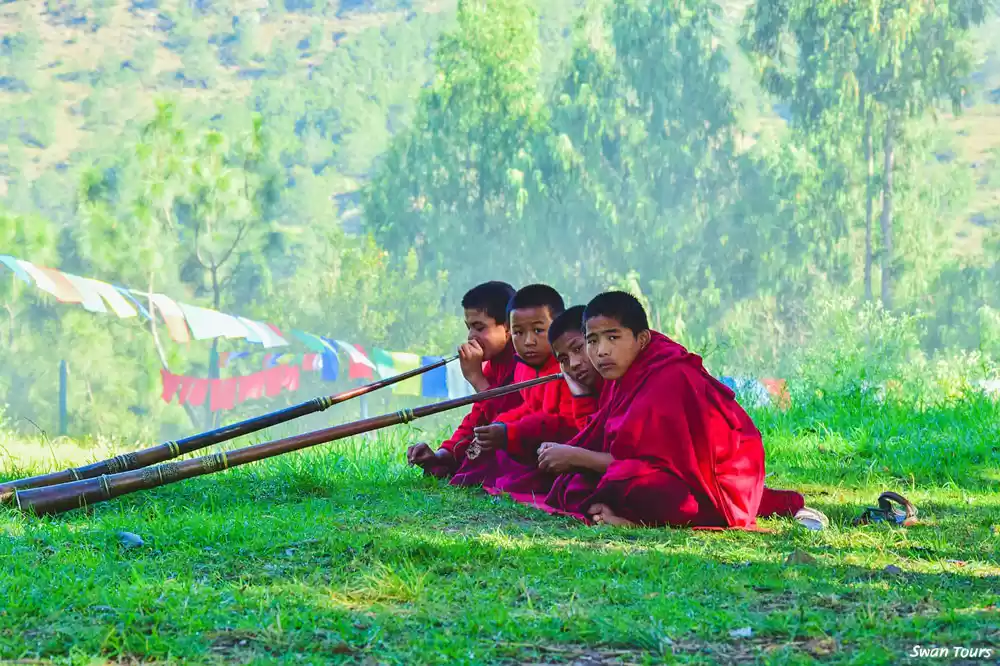
Tourism has not been that much widespread in Bhutan as we look at maintaining and nurturing our culture and custom. Bhutanese are immensely religious individuals and for that reason it would be excellent on ones part to respect and comprehend the regional customs and way of living, particularly while going to those locations of religious significance.
Book Bhutan tour packages with http://www.swantour.com/ at best prices.
Tourist Industry in Bhutan wases established with the concept of sustainability in mind, which indicates that tourist must be environmentally and ecologically friendly, socially and culturally acceptable, and also financially practical.
Due to this, tourism is monitored with a rigorous hand and the number of travelers checking out Bhutan is maintained at an ecologically workable level.
Visitors may experience Bhutan only on extensive plan tours for which a set everyday tariff is set by the Royal Government of Bhutan. This tariff covers the following services: lodging & all meals, transport, guide, entryways charges to museums, monoliths and cultural sites, and furthermore a cultural program for visitors traveling in a group of 3 or above.
Tourist Places in Bhutan
Bhutan a purely Buddhist Himalayan Kingdom is unsurpassed in its scenic majesty and lively culture. The Kingdom shares with Nepal the world's greatest concentration of mountains and living heritage Buddhism. It is among the few nations worldwide still unblemished, paradise for traveler interested in Buddhist culture and viewpoint, plants and fauna, trekking and mountaineering. Trip to Bhutan is thought about an experience once in a life time.
Thimphu
A few years of ages, Thimphu was developed by the late king Jigme Dorje Wangchuk, to replace the ancient capital of Punakha a range of mountains away. At an altitude of 7,710 feet in the fertile valley of the Wang Chu River, the capital Thimphu is an engaging blend of the old and the brand-new. A distinct law, which maintains the kinds and concepts of Bhutan's standard architecture even in brand-new buildings, offer Thimphu a wonderful structural consistency. The capital's most striking visual landmark is the splendid Tashichhodzong, which is the seat of the Royal Government and Central Monastic Body.
Also Visit - Thimphu Paro Tour
Phajoding
To the west of Thimphu, the Phajoding abbey neglects the town from 10,000 feet and commands a magnificent view of whole area. Visitors might also go to Dontsho la pass for an impressive vista of snow peaks, lakes, streams and alpine flowers, and to Dochu la, another picturesque mountain pass, where the panorama of vivid rhododendrons and azaleas against the backdrop of the great Himalayas is breathtaking.
Paro
With patchwork fields, willow glades, murmuring trout filled streams and spread hamlels, Paro is the most attractive of Bhutan's valleys, the air exudes a sense of profound peace. It was here that Padma Sambhava, much better referred to as Guru Rimpoche, originated from India in the 8th century with the message of the Lord Buddha. At 7,382 feet Paro is the only airport site of Bhutan. Besides the vibrant spring Tsechu, Paro has a variety of sights and monoliths to enthrall the visitor. The pastoral charm of Paro valley, stunning views of Mount Jhomolhari, the amazing monastery of Taktsang which holds on to a large rock cliff, the ruins of Drukgyel Dzong-- fortress of the victorious Drupas and the National Museum, housed in an ancient watchtower, are a few of the destinations that make Paro among the high-points of any vacation in Bhutan.
Kytchu-Lakhang
paro-museumBelow the Dzong, throughout a covered middle ages bridge, is uggen palri a royal palace, where designer's creativity reached, hiterto unattainable peaks in the euphoria of dedication. Here is Bhutan's architecture at its height.
Also Visit - Thimphu Paro Punakha Holiday Package
About 6.5-km north of the Dzong, is the famous and most revered sacred shrine in Bhutan; Kytchu-Lakhang was integrated in the 7th century, the wood floor tells the tale of the years of prostration by the devout monks, for goughed into the heavy wood are footprints as clear as if freshly made. The Queen Mother of today king recently included a brand-new chapel devoted to the Guru Rimpoche with a great image of the saint crafted by Bhutan's primary craftsmen’s.
Vhunzom or Confluence
In a location called "Vhunzom" or Confluence- the conference place of the Para Chu and Wang Chu rivers-- branch roadways lead off to Paro and the Ha valleys. This was an essential station in Bhutan's when flourishing trade with Tibet, beyond it lies the Chumbi valley.
Taktsang (The Tiger's Nest) and Kyichu
Beyond Paro, the road runs along the river valley to the Tibetan border. A few miles down the road, a side track leads onwards Tastsang a gem-like abbey that clings to a sheet 3,000 foot rock face. The name Taktsang means "theTtiger's Nest" for the legend that Padma Sambhava, the bringer of Buddhism, flew here from Tibet on the back of a Tiger. Today pilgrims and other visitors reach it by crossing a bridge and installing a high, winding track on horseback. The monks welcome visitors and will readily serve as guides and show their small sacred library. Another 15 minutes even more along, even highen Thantaktsang, is the Sang-Tog Peri abbey. Its name suggests literlally" the temple of heaven" a claim which no one who sees it, would think to contest.
Punakha- The Old Capital
A 3 hour drive to the east of Thimphu takes one to the old capital of Bhutan-Punakha. An exceptional example of Bhutanese architecture, the punakha dzong wonderfully base on the bank of the river Punakha. With abundance of trouts, the Punakha River is thought about an angler's paradise.
Also visit - Best of Bhutan Tour
Environment
Weather, as anywhere else on the planet is unpredictable in Bhutan. Bhutan has the same latitude as Miami & Egypt. Throughout the summertime the weather is rather warm and pleasant with occasional rain fall. In basic, the higher the altitude, the cooler the weather condition, and with a cool breeze blowing down off the mountains, even a low-lying valley can end up being rather chilly. Monsoon seasons are rainy. Winter season is incredibly beautiful with occasional snow, clear warm days, chilly evenings that makes it ideal for treking and sightseeing with the whole of the mountains and valleys in clear view.
Southern areas are tropical with plains and hills. Central areas vary depending upon the elevation from sub tropical to moderate temperate valleys and mid Size Mountains (5,000 meters). Northern areas/high elevation alpine environment Punakha is "California like" with temperature levels differing from 5 ° Celsius to 17 ° Celsius in winter and in summer from 18 ° Celsius to 32 ° Celsius with a yearly rains of 600mm. Paro & Thimphu has moderate climate with temperatures of -3/ 12 in winter to 13/25 degrees in the summertime with a yearly rainfall of 800mm. Summer shower season (July to September) evening rain with long dry periods throughout the day. Winter season (November to February) offers clear days and nights with a really comfy environment.
Accommodation
Bhutan being an extremely little country and an establishing one has few tourist lodgings which are elegant however there are a lot of lodgings which offer standard needs, particularly as you travel additional east.
Also Visit - Bhutan Honeymoon Packages from Delhi
If you are trying to find a bit of high-end then we can arrange for you to remain at 5-star facilities i.e. specifically Amankora (in Thimphu, Punakha, Paro, Gangtey and Bumthang), Uma Paro and Hotel Taj. These establishments have been developed as an outcome of Foreign Investment in Bhutan. They offer a range of advantages which are rather special from the other facilities, for that reason is prepared to spend for these privileges. Also now we have some regional hotels which have actually improved the services and centers such as Zhiwaling. We can likewise schedule cooks to accompany you on treks and camping trips that are knowledgeable in developing scrumptious meals.
Tourist Guide
Our tourist guide have good knowledge of the history and culture of Bhutan and are very hospitable in nature. They are certified by the Tourism Authority of Bhutan. The most typical mode of communication is English but we can also supply guides who can speak French and Japanese.
Language
We have numerous other local languages and the National Language we speak is called as "Dzongkha", but English is really typical among Bhutanese also and is spoken with complete confidence by most of us. Therefore it is the second main language and it is a medium through which communication happens.
Food
Bhutanese meals consist mainly of vegetables, chili, cheese, chicken, beef, pork, yak, rice with "Ema Datse" is the nationwide dish (chili & cheese stew) Momo (cheese or pork dumplings), Hogay (cucumber, tomato, onion, and cheese salad), curries with chicken or pork, Nosha Paa (beef and chili) these are all popular Bhutanese dishes.
Also Visit - Thimphu Punakha Paro Package
Due to the hot flavoring and plentiful usage of chilies in the food it is spicy. There is little to no seafood but on request you can get buffet design meals with choice of continental, Bhutanese and Indian Cuisine. Our cooks, who accompany the treks and outdoor camping tours, are well trained and equipped and can come up with scrumptious feasts every day. For beverages locals delight in Yak Butter Tea (tea leaves, water, salt, & yak butter) and Ara (spirit distilled from rice).
Drinks
Though the water that we have here is pure, it is always much safer to opt for mineral water or distilled water. A variety of cold beverages such as Coke, Sprite, Miranda etc are available in the markets out here. We have actually a locally made drink referred to as "Ara" (Spirit Distilled from Rice/Corn and Wheat).
Electricity
We create our own hydro electrical power with the assistance of our rivers. All towns in the urban locations of Bhutan have power supply. The supply of electricity to towns some distance from the road is a continuous task numerous outlying towns are not connected yet. Trekking will take you far from electric products. The voltage supply is 220 volts, 50 cycles AC with a three prong plug (like India).
Medical
The Government of Bhutan does not check for vaccinations upon entry into Bhutan. Depending on date with typical Asian vaccinations is recommended. Medical facilities and medical centers are offered in all the districts of the Country. Serious cases need medical evacuation air lift to Bangkok. As the majority of parts of Bhutan are positioned at high elevation, it's a non-Malaria region except in southern parts of Bhutan. Rigorous health standards are imposed in the food production locations by BAFRA (Bhutan Agriculture and Food Regulatory Authority).
Also Visit - Le Meridien Thimphu Bhutan
You may struggle with acute mountain sickness. Altitude Sickness is the outcome of your body's failure to adapt to higher altitudes since of the rate of ascent. It can occur as you take a trip from water level to high elevation. For 99% of tourists the elevation of the country and passes in between the valleys does not produce problems. For tourists going on treks we require to understand whether they have any former history of acute mountain sickness. We strongly recommend that you purchase comprehensive insurance coverage and have a complete medical checkup before you leave house. Please notify us of any pre-existing medical condition.
Headache, loss of cravings, nausea, vomiting, tiredness, sleeping disorders, shortness of breath, and tingling on hands or feet are Symptoms of altitude sickness and it can be cured by Aspirin, ginger tea, butter tea, and in severe cases for people who have previous trouble 125mg of Diamox every 12 hours (not available in Bhutan) along with Reduced altitude will be of excellent aid.
Communication
All major towns have standard communication facilities such as web cafes, telephone, fax, telegraph and post. There are satellite and national tv broadcasts (Bhutan Broadcasting Service) in the major towns. If you have global roaming mobile coverage, you ought to consult their protection provider if Bhutan is included. If not, determine this before arrival, SIM card and recharge card (Voucher) is quickly offered in the area.
Also Visit - Taj Tashi Bhutan
Shopping
Distinct items to acquire while in Bhutan:
1. Himalayan antiques from Tibet, Nepal, and northern India
2. Bhutanese crafts:
- weaving products made from silk, cotton, yak hair, & wool - wood bowls, cups, masks, & carvings
- religious paintings called thangkas
- jewellery.
- paper making or desho (originating from the word "de" referring to the Daphne plant).
Bhutanese consumables consist of tsheringma tea, honey, apple items, and so on. Best selection of shopping is carried out in Thimphu. Shops on the street will accept Ngultrum, the Indian Rupee (at par 1 to 1 with the Nu), and the US Dollar. The only charge card accepted at shops (minimal stores) is Visa. Banks will not carry out cash loan on credit cards. There are no ATM machines offered for international deals. Tourist checks can be cashed at banks within the formerly listed currencies. It is unlawful to export or remove Bhutanese antiques from Bhutan. If unsure, certificates are readily available from the Department of Antiquities to determine if the item is a true antique and where its origin is from. An antique is specified as a religious item 70 years of ages or more. All other items 100 years old or more.
Photography
Bhutanese are usually delighted to be photographed; all it takes is an easy gesture to obtain their agreement. Nevertheless, there are some limitations on taking pictures in the Dzongs, abbeys and temples.
Also Visit - Le Meridien Paro, Bhutan
Clothing in Bhutan
Due to the varying temperature level and weather conditions it is recommended to dress warmly, layered clothing is much better than a couple of thick garments in order to keep warm. Clothing ought to preferably be made from natural products in order for the body to be comfortable.
As Bhutan remains in its developing stage individuals think differently therefore it would be recommended for you to avoid walking in skimpy or tight fitting clothes. For visits to abbeys, dzongs and other spiritual institutions dress modestly and respectfully, and avoid smoking while on the premises. Hats, caps, shoes and so on ought to be eliminated before going into the premises.
You have to pack clothing as per season, sunglasses/spare glasses, set of casual shoes, knife, hat, umbrella, cam, films and devices (consisting of extra electronic camera batteries), insect repellent, hand cream, little sewing package & safety pins, torch or flash light with extra batteries, mirror, scissors, sun cream, lip salve, soluble aspirin, antibacterial cream, anti-histamine cream, anti-diarrhea tablets, a preparation for the relief of sunburn, and any medication you take routinely, or might require to take for a periodically recurring condition, such as asthma.
VISA for Bhutan
Your passport needs to have at least 6 months' credibility. You will also make sure that you have an extra page for a visa for Bhutan, along with area for the visas for any countries you are going to en route.
Also Visit - Bhutan Luxury Travel Packages
If you need to get a brand-new passport please do so well prior to your prepared trip so that there is no hold-up in looking for your Bhutanese visa. The visa is provided by the Ministry of Foreign Affairs within Bhutan as Bhutan has very couple of embassies abroad. No foreign objectives abroad give Bhutan tourist visas. You might use ahead of time through a trip operator such as Bhutan Tours Trip and get confirmation that your application has been approved prior to you take a trip to Bhutan. You can fill up the Contact Us form. There is no requirement to send the images or sign the visa application at this time.
It is suggested to use early for the visa since the process takes a bit more time than a typical visa application. Once you send your individual info, Bhutan Tours Trip sends your application first to the Department of Tourism (DOT) and then to the Foreign Ministry, both based in Thimphu. The visa is not issued up until the DOT has actually checked that the full tour payment has actually been received into its savings account. The confirmation and referral number then sent out to Bhutan Tours Tripand a copy will be send to you. You have to reveal this at the check-in desk for Druk Air. You cannot board the Druk Air flight without this file so it is essential to have it in addition to your passport.
Upon your arrival in the nation, either at Paro Airport or at Phuentsholing/Samdrup Jonkhar (if you are entering by roadway) the actual visa is marked on the passport. At this time at the place of entry you have to present a passport image with your passport number written on the back and pay the visa cost, directly to the migration officer. The going rate is US$ 20 money. Before leaving for Bhutan you have to prepare the cash in advance. Please remember that the visa is issued for exactly the exact same number of days and dates as scheduled by you. If circumstances occur for a visa extension when you remain in Bhutan it can be set up. Members of groups are expected to get here and depart together.
Also Visit - Bhutan Packages from Delhi
Licenses
Path authorizations are required when moving between all districts in Bhutan except from Paro to Thimpu. Bhutan Tours Tripobtains a license for the places mentioned in your travel plan and this permit is examined and endorsed by the cops at migration checkpoints strategically located at essential roadway junctions. Allows to Enter Temples after 2001 the rules were altered to enable tourists to visit the courtyards of dzongs and, where feasible, one designated lhakhang (temple) in each dzong but just when accompanied by a certified Bhutanese guide.
This provision undergoes particular limitations, including checking out hours, gown requirements and other rules that differ by district. Since dzongs are open to all during the time of a Tsechu. You might go to the courtyard, however not the lhakhangs, if your journey corresponds with a festival. If you are a practicing Buddhist, you may request an authorization to visit specific dzongs and religious institutions. This is released by the National Commission for Cultural Affairs, and an application must be made in advance through Bhutan Tours Trip. The credibility of your application will be improved if you include a letter of recommendation from an acknowledged Buddhist organization in your home country.
Flight Connection
It would be extremely hassle-free if you show up at Bangkok, Delhi or Kathmandu, one day earlier to the Druk Air departure for Bhutan. Druk Air flights usually leave early in the early morning. We cannot be held accountable if you miss out on the connection to Bhutan, though we will do our extreme to assist you get on the next flight and to extend your visa. All additional costs incurred will be borne by you. Likewise, on the return journey, we would not recommend you to reserve a flight which connects on the very same day unless you have a ticket that permits some versatility. Druk Air flight schedules go through weather conditions in the mountains and are often altered at the last minute.
Flight Frequency and Air Fares
Our national airline company flies a number of times a week between many of its locations, however flight timings and frequency differ according to season. Druk Air's site www.drukair.com.bt includes details of current flight schedules and airlines tickets ( air travel cancellation policy ). Please check the site or contact Bhutan Tours Trip for the latest info when preparing your travel plans. Please let us understand if you would like the present flight schedule.
The splendid mountain landscape en path is seen at its finest in the cold weather, when skies are generally very clear. While flying via Kathmandu to Paro you experience the most remarkable view of the Himalayan Mountain Ranges, including the Everest region. Mountain Kanchenjunga is visible for some time on all paths when the weather is clear. Flying to and fro from Bhutan is a life time experience to be cherished.
Finest Time to Visit Bhutan
If you pass Bhutan's size, you will be amazed when you learn just how much this small, mountainous country needs to provide. While Autumn and Spring are the most popular months to visit, summer season and winter too have their own draws and destinations.
Over 20% of worldwide tourists get here in the month of October! Travelers are highly recommended to book at three months in advance in order to delight in a smooth journey with no hiccups if they are taking a trip in October. Nevertheless, each season and each month has its own charm and specialty that makes the country an ideal travel location throughout the fiscal year. If you wish to skip the crowd however take pleasure in the best possible weather condition, you may wish to consider May and November. If you are short on budget plan, consider travelling in months of June or December when the tariff is low.
Also Visit - Paro Haa Thimphu Holiday Package
Be it its interesting and remarkable dances, inspiring mountain views, or sunlit trekking routes, you are bound to have a memorable and genuine experience in Bhutan. However, tourists are extremely recommended to book at 3 months beforehand in order to take pleasure in a smooth journey with no hiccups. Here we have actually noted down the four finest seasons to visit and why so that you can plan your journey appropriately.
Spring
March, April, and May are the spring months in Bhutan. If you are a nature fan who is keen on exploring the nation's flora and fauna ranges, it's the best time for you. Some of the main highlights of springtime are visit to Jacaranda at Punakha in mid-May and attending lively festivals like Gomkora and Paro Tshechu. You can also go on Jomolhari Trek and Drukpath Trek from April to May!
Fall
September, October, and November are the fall months in Bhutan. Yet another profoundly popular traveler season, the mild weather condition makes it a perfect time to check out Bhutan. The main highlight of this period is the Black-Necked Crane Festival. In addition to going to other Bhutanese celebrations like PrakarTshechu, Jakar, and Jambay Lhakhang Drup, you can unwind and unwind in deep valleys that turn to golden shade as farmers prepare to gather rice crops.
Summer
June, July and August are the summertime in Bhutan. If you are planning to avoid high tariff and the harsh cold winter, think about going to during summer. You will show up just in time for considerable Bhutanese celebrations like NimalungTshechu and KurjeyTshechu. Intense summertime skies with green foresting and growing paddy fields offer an amazing background for your remarkable visit.
Winter season
December, January, and February are the cold weather in Bhutan. If you want to have great mountain views versus clean sky sans additional tariff, it is the very best time to visit for you. The most affordable temperature drop usually occurs throughout completion of January, together with possibilities of snow. The main highlights of the season are necessary festivals like Punakha Dromche and Tshechu that happen in February. The not so extreme weather condition of Punakha likewise makes it a terrific escape town for winter.
For more information on Bhutan tour packages visit - http://www.swantour.com/bhutan-tours